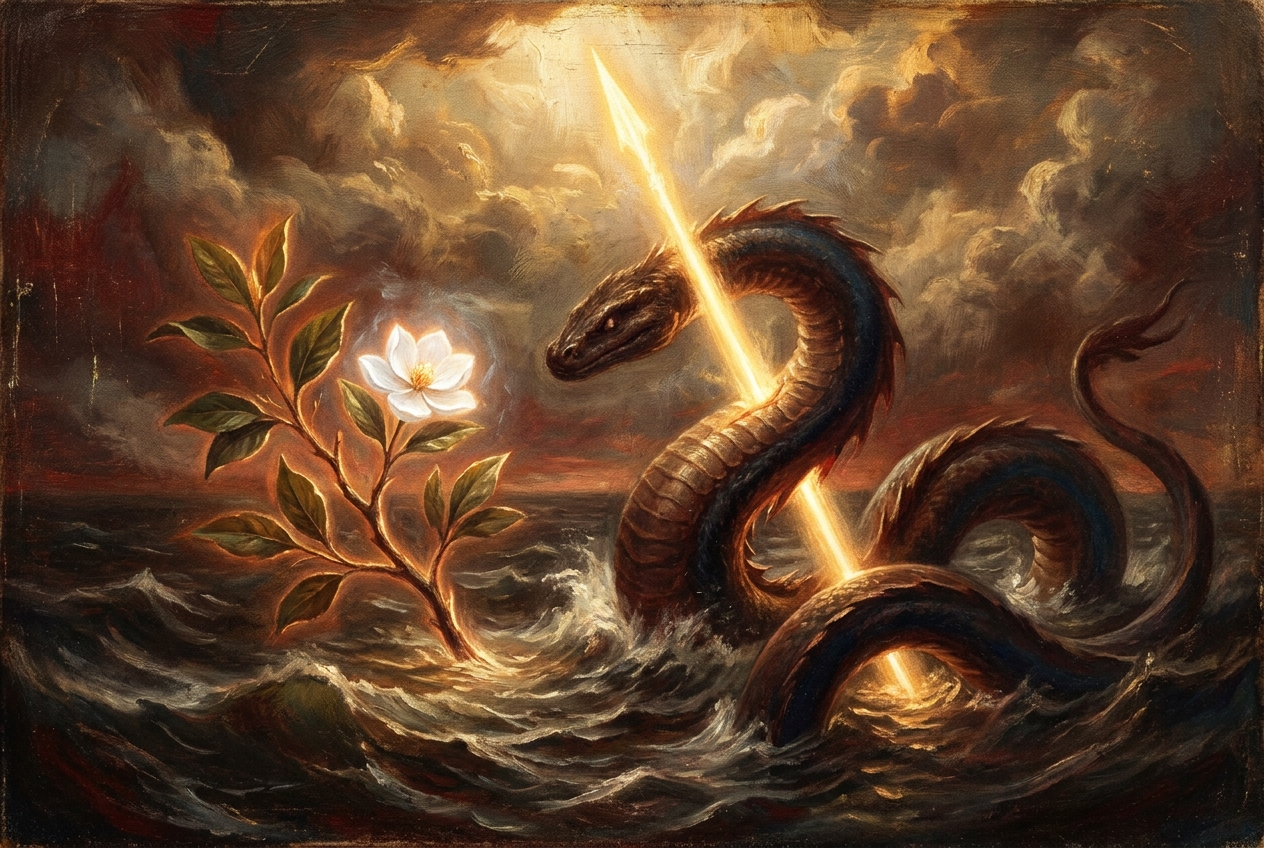
The Secret of Leviathan: What Kabbalah Gets Wrong
There is a reason you have never heard this from a Sunday morning pulpit. The Secret of Leviathan, as described in the Talmud and built into the architecture of Kabbalistic teaching, is not a peripheral footnote in occult history. It is a load-bearing doctrine in a system that has been quietly influencing both Judaism and sectors of Christendom for centuries.
In Part 9 of his "Exposing Kabbalah" series, Dan Duval pulls that thread.
Why Kabbalah Is Not Neutral Ground
Before getting to Leviathan specifically, Duval lays out why Kabbalah cannot be treated as mystical decoration or harmless spiritual exploration. This is not a system that simply adds depth to Scripture. Kabbalah rewrites the story, replacing the Jesus of the Bible with a counterfeit framework of illumination, consciousness, and ascent.
Duval returns to a core claim he has built across the first eight episodes of this series: Kabbalah makes no clear distinction between spirit and soul. That collapse matters. When the boundary between human spirit and demonic presence is blurred at the doctrinal level, you lose the theological tools required to identify bondage, let alone break it.
That is not an abstract concern. Thousands of believers have incorporated Kabbalistic concepts into their prayer lives, their understanding of spiritual gifts, and their models of inner healing, often without realizing where those concepts originated.
Jesus as the Branch, King, and Priest
Duval does not just deconstruct. He rebuilds from Scripture.
Running through Isaiah's prophecies of Messiah and the imagery of Moab, he makes the case that Jesus occupies every role Kabbalah assigns elsewhere: Branch, King, Priest. The Kabbalistic Tree of Life is not a neutral map of spiritual reality. It is a counterfeit infrastructure laid over a truth that Scripture already contains.
The Branch is not a sephirot. The King is not an ascending consciousness. The Priest is not an initiated occultist who has climbed the tree. These roles belong to one Person, and that Person is not ambiguous about who He is.
What Is the Feast of Leviathan?
This is where Part 9 breaks new ground in the series.
The Feast of Leviathan is a concept embedded in Talmudic tradition: the idea that in the age to come, Leviathan will be slaughtered and its flesh served as a feast for the righteous. Duval walks through how this teaching functions inside Kabbalistic cosmology, where Leviathan and Da'at (the hidden sephirot associated with the abyss and the veil) are positioned not as enemies to be defeated, but as sources of illumination and hidden knowledge.
This is the rewrite Duval has been tracking across the entire series. The biblical Leviathan (the chaos serpent, the enemy of God's order) gets repositioned in Kabbalistic teaching as a gate to deeper mysteries. What Scripture identifies as something God opposes and will destroy becomes, in this framework, a source of spiritual power.
God makes His own position clear. Duval is direct: Leviathan is not a redemptive agent. It is not a gatekeeper to legitimate spiritual experience. And the idea that consuming its power brings illumination is a lie with ancient roots.
Does This Actually Affect People Today?
Yes. That is the point Duval keeps returning to across this entire series.
Survivors of high-level occult involvement, including satanic ritual abuse and government-sponsored mind control programs, frequently report encounters with Leviathan as a spiritual entity tied to their programming. The Bride Movement team has worked with enough of these cases to know that this is not theoretical. The architecture of the Kabbalistic tree, including its connection to Leviathan and Da'at, shows up in the lived experience of people seeking freedom.
For believers who have not had that kind of exposure, the danger is subtler. Kabbalistic concepts have been absorbed into charismatic and prophetic communities through language about "ascending," "levels of consciousness," and even certain approaches to the "third eye." When the language is borrowed without the theology being examined, the roots follow the terminology.
What to Do With This Information
Part 9 is dense. Duval himself acknowledges the volume of material covered across the first eight episodes and spends significant time in review before introducing new content. If you are new to this series, starting at Part 1 is the right move.
If you are already tracking with the series, watch the full episode below. The section on the Feast of Leviathan and the Talmudic secret alone is worth the full hour.
Take the Next Step Toward Healing
Start Your Healing Journey